

Your blood test says your iron is fine. Your doctor nods, your results fall within range, and yet you are exhausted, your hair is falling out, and you cannot think clearly past 3pm. This is one of the most common and consistently under-addressed patterns in modern health: ferritin levels that are technically "normal" but clinically insufficient.
Ferritin is the protein your body uses to store iron. It is not the same as serum iron or hemoglobin, and that distinction matters more than most standard blood panels suggest. Learning how to increase ferritin levels requires understanding why the reference ranges currently used by most labs systematically underestimate how much iron your body actually needs to function well.
This article walks you through the science: what ferritin is, what your levels actually mean, which symptoms correlate with specific thresholds, and the most evidence-backed strategies for raising ferritin. From diet and supplement form selection to the timing protocol most people have never heard of.
What is ferritin and why it's not the same as iron
Ferritin is an intracellular protein that stores iron and releases it in a controlled way when the body needs it. Think of it as your iron reserve: the buffer between daily dietary intake and the iron your tissues require at any given moment.
When doctors measure iron status, they can look at several markers:
- Serum iron: the amount of iron currently circulating in the blood, highly variable and affected by recent meals and time of day
- Haemoglobin: the iron-containing protein in red blood cells that carries oxygen; it only drops when deficiency is severe and prolonged
- Ferritin: the stored form, and the earliest, most sensitive marker of iron depletion
The critical point is this: haemoglobin can remain completely normal while ferritin is significantly depleted. This is called non-anemic iron deficiency, and it is far more common than most people, and many clinicians, realise. A 2023 paper in ASH Hematology estimated that 30–50% of healthy women fall within technically "normal" lab ranges while having no measurable bone marrow iron stores.
If your ferritin is low but your full blood count looks fine, you are not imagining your symptoms.
What your ferritin levels actually mean
Standard reference ranges vary dramatically between laboratories. This variation is not random: most ranges were derived from population distributions, not from studies identifying what levels produce optimal health outcomes.
| Source | Women (ng/mL) | Men (ng/mL) |
|---|---|---|
| Cleveland Clinic | 15–205 | 30–566 |
| MedlinePlus | 12–150 | 12–300 |
| MSD Manual | 12–150 | 20–250 |
| Functional medicine optimal | 60–100 | 80–120 |
The 50 ng/mL threshold
A 2025 review in PMC, examining global ferritin thresholds using hepcidin and soluble transferrin receptor (sTfR) as sensitive biomarkers of iron status, identified 50 ng/mL as the physiologically meaningful lower boundary for adequate iron stores. Below this level, the body begins compensating in ways that affect energy production, cognitive function, and tissue repair, even when haemoglobin remains normal.
In practice, most integrative and precision medicine clinicians target:
- Minimum functional level: 50 ng/mL
- Optimal range for most adults: 60–100 ng/mL
- Optimal for endurance athletes: 80–100+ ng/mL
A ferritin of 14 ng/mL is technically "not deficient" by many lab standards. Functionally, it is almost certainly contributing to symptoms.
Signs your ferritin may need support
Low ferritin produces a wide range of symptoms, most of which are gradual, non-specific, and easy to attribute to stress, poor sleep, or getting older. The research identifies several patterns with specific ferritin thresholds.
Fatigue and low energy
The strongest evidence comes from a double-blind, placebo-controlled RCT published in CMAJ (Vaucher et al., 2012). Researchers enrolled 198 non-anemic menstruating women with ferritin below 50 ng/mL and found that iron supplementation reduced fatigue scores by 47.7% versus 28.8% in the placebo group, a statistically significant difference of 18.9 percentage points (p=0.02).
This is an important finding: all participants had normal haemoglobin. The fatigue was driven by suboptimal ferritin alone.
Hair loss
Ferritin plays a direct role in hair follicle cycling. A cross-sectional comparative study (Cheng et al., 2021, Clinical, Cosmetic and Investigational Dermatology) found that women with telogen effluvium (diffuse, stress-related shedding) had mean ferritin levels of 24.27 ng/mL, compared to 45.55 ng/mL in healthy controls. The optimal diagnostic cut-off distinguishing hair-loss patients from healthy subjects was 24.45 ng/mL.
A separate analysis in the Journal of the American Academy of Dermatology (Trost et al., 2006) recommended maintaining ferritin above 70 ng/mL for optimal hair growth, well above what most labs flag as deficient.
Cognitive function and focus
Iron is essential for synthesising dopamine and serotonin, and for myelinating neural pathways. Murray-Kolb and Beard (2007, American Journal of Clinical Nutrition) found that iron-sufficient women outperformed iron-deficient women on all 8 cognitive tasks studied (p=0.011) and completed them significantly faster (p=0.038). After 16 weeks of iron supplementation, cognitive performance in iron-deficient participants normalised.
Other symptoms associated with low ferritin
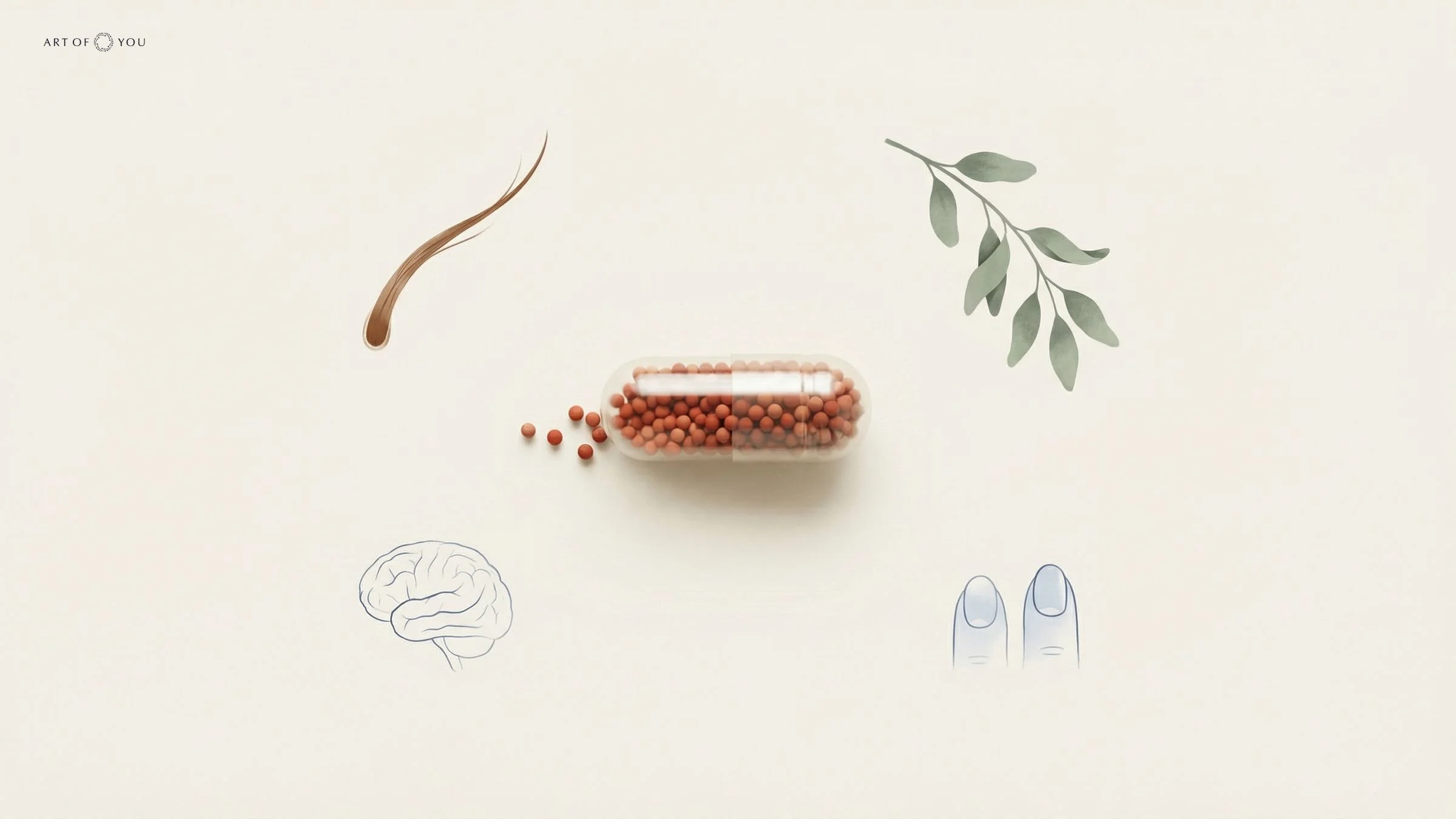
- Restless legs syndrome (strongly linked to brain iron insufficiency)
- Cold hands and feet (impaired peripheral circulation)
- Shortness of breath on exertion (reduced oxygen-carrying capacity)
- Brittle nails, pale inner eyelids
- Reduced exercise tolerance and slower recovery
What causes ferritin to drop
Ferritin depletes when iron losses exceed intake or absorption. The most common causes:
- Menstruation: the single largest cause of iron deficiency in women of reproductive age; women with heavy periods lose significantly more iron each cycle than dietary intake can replenish
- Dietary insufficiency: plant-based and vegetarian diets provide non-heme iron exclusively, which absorbs at 2–20% efficiency compared to 15–35% for heme iron
- Gut absorption issues: coeliac disease, low stomach acid, and inflammatory bowel conditions reduce iron absorption at the intestinal level
- Intense exercise: endurance athletes lose iron through foot-strike haemolysis (red blood cell rupture), sweat, and GI micro-bleeding; female endurance athletes have particularly high prevalence of depleted iron stores
- Chronic inflammation: inflammatory signalling elevates hepcidin (discussed below), which suppresses iron absorption even when intake is adequate
- Blood donation: each whole blood donation removes approximately 200–250 mg of elemental iron
- Pregnancy: iron demands increase substantially in the second and third trimesters
How to raise ferritin levels through diet
Diet is the foundation, but its ceiling depends heavily on food choices and strategic pairing.
Heme vs. non-heme iron
| Iron type | Source | Absorption rate |
|---|---|---|
| Heme iron | Meat, poultry, seafood | 15–35% |
| Non-heme iron | Plants, legumes, fortified foods | 2–20% |
| Non-heme iron (with inhibitors present) | Same sources | ~2% |
The most iron-dense food sources:
Heme sources:
- Beef liver: 5–6 mg per 85g serving
- Oysters: 8 mg per 85g serving
- Beef or lamb: 2–3 mg per 85g serving
- Dark chicken meat: 1.1 mg per 85g
Non-heme sources:
- Fortified cereals: up to 18 mg per serving
- Lentils: 3.3 mg per 90g cooked
- Cooked spinach: 3.2 mg per 90g
- Tofu: 3 mg per 90g
- Pumpkin seeds: 2.5 mg per 30g
- Dark chocolate (70%+): 3.4 mg per 30g
Using Vitamin C to enhance absorption
Vitamin C is the most potent known enhancer of non-heme iron absorption. A meta-analysis in Proceedings of the Nutrition Society found that vitamin C significantly increased iron absorption with a mean difference of +5.87% across test meal studies. Hallberg et al. (1989, American Journal of Clinical Nutrition) showed that ascorbic acid at a 2:1 molar ratio to iron increased absorption by 270–291% under controlled conditions.
Practical guidance:
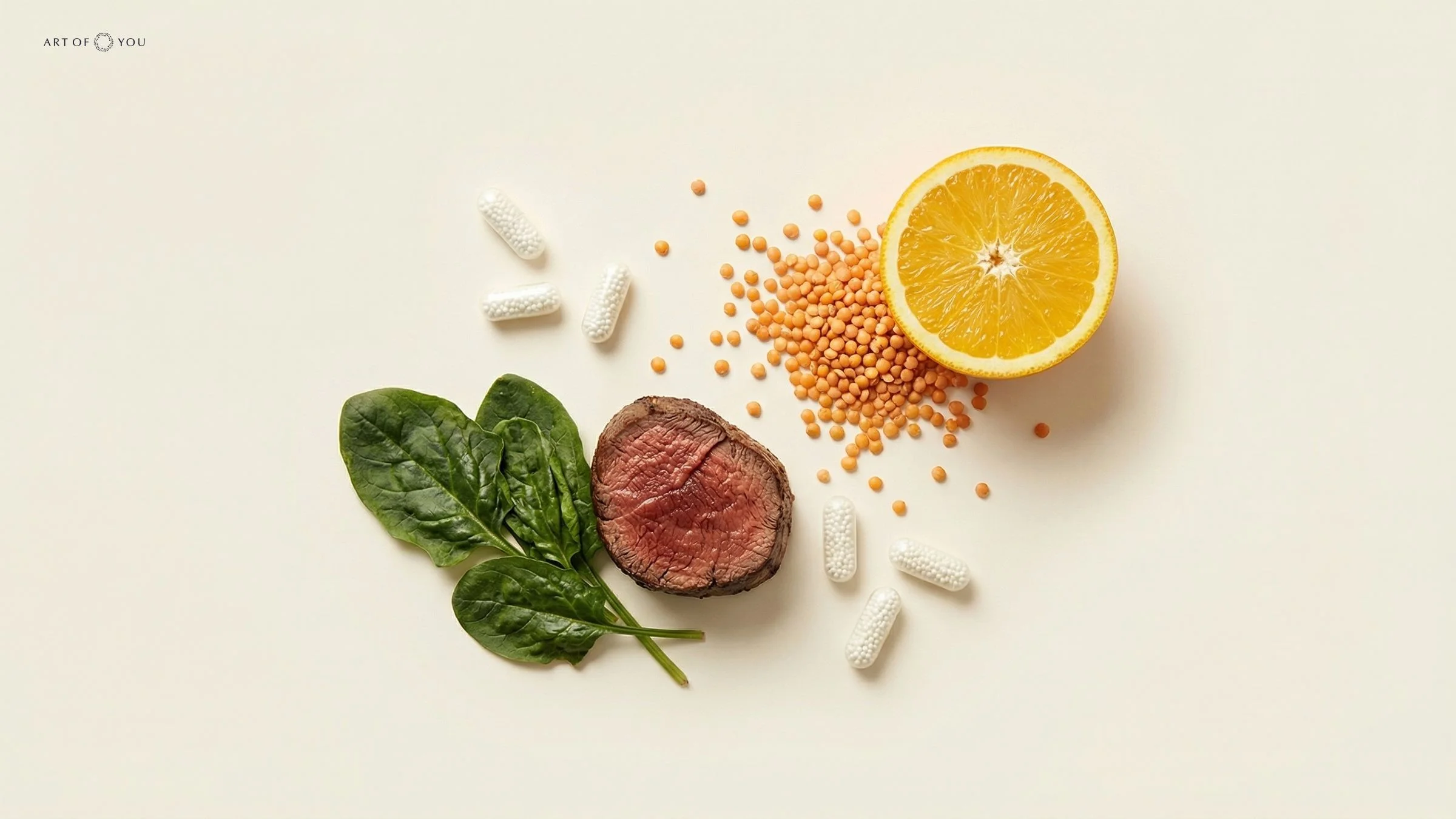
- Pair iron-rich plant foods with vitamin C sources at the same meal: citrus juice, bell peppers, kiwi, or broccoli
- 75–100 mg of vitamin C alongside an iron supplement meaningfully improves absorption
What to avoid around iron-rich meals
Several common foods and drinks significantly reduce non-heme iron absorption:
- Tea and coffee: tannins can reduce absorption by 60–90%; separate by at least 1–2 hours
- Calcium-rich foods or supplements: blocks both heme and non-heme iron absorption
- Phytates: found in whole grains, legumes, and nuts; soaking or sprouting reduces phytate content
- Polyphenols: red wine, some vegetables
Choosing the right iron supplement
Not all iron supplements are equivalent. Form determines both how much you absorb and how well you tolerate it.
| Form | Relative absorption | GI tolerance | Notes |
|---|---|---|---|
| Ferrous sulfate | Standard reference | Poor (25–35% report constipation) | Most studied; cheapest |
| Ferrous bisglycinate | 2–4x better than sulfate in high-phytate diets | Good (8–12% GI side effects) | Amino acid chelate; bypasses phytate/tannin inhibition |
| Ferrous gluconate | Moderate | Better than sulfate | Less commonly studied |
| Sucrosomial iron | Comparable to bisglycinate | Excellent | Absorbed via lymphatic pathway; useful in absorption disorders |
A randomised controlled trial found ferrous bisglycinate absorbed at 6.0% versus 1.7% for ferrous sulfate in a whole-maize meal: 4 times higher absorption in a high-phytate food environment. For people eating predominantly plant-based diets, bisglycinate's advantage is clinically significant.
Dosing context from research:
- Typical therapeutic dose: 60–100 mg elemental iron per day
- Maintenance dose: 15–30 mg elemental iron per day
- Take iron on an empty stomach unless GI distress requires food
The hepcidin factor: why timing matters as much as dose
This is the most overlooked variable in iron supplementation, and the one most likely to explain why many people supplement for months and see little improvement.
Hepcidin is a peptide hormone produced by the liver that acts as the master regulator of iron absorption. When hepcidin is elevated, it blocks ferroportin, the iron export channel on intestinal cells, and prevents absorbed iron from entering circulation. The result: iron passes through your gut without being used.
What raises hepcidin
- Oral iron supplementation itself (taking iron today raises hepcidin for ~24 hours, suppressing absorption from tomorrow's dose)
- Exercise, particularly endurance training (hepcidin peaks approximately 3 hours post-exercise and remains elevated for 3–6 hours)
- Inflammation and infection
- Recent iron ingestion
The alternate-day dosing breakthrough
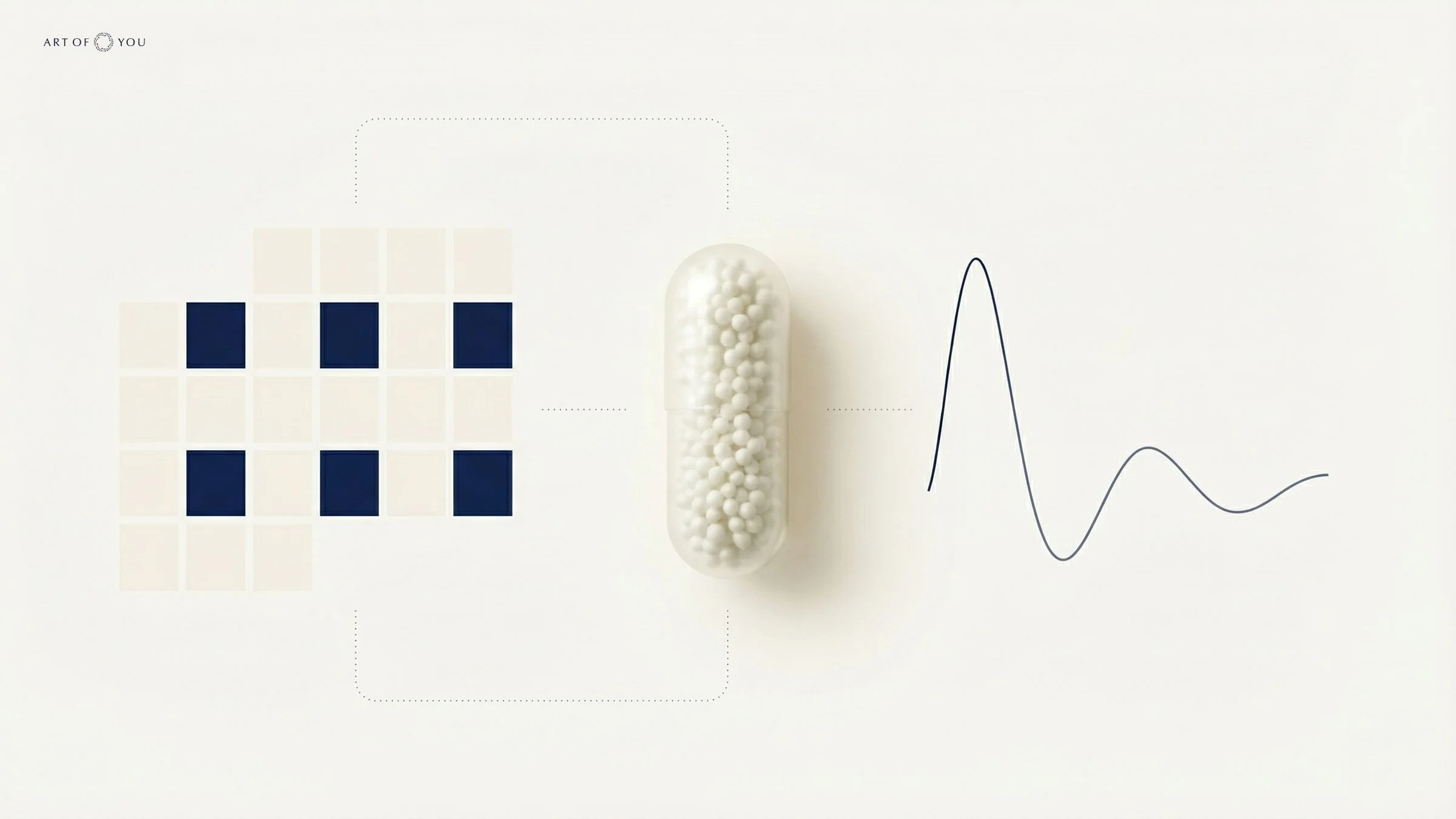
Stoffel et al. (2017, The Lancet Haematology) conducted two open-label randomised controlled trials in iron-depleted women comparing consecutive daily dosing versus alternate-day dosing. The findings were striking:
- Daily dosing: 16.3% fractional iron absorption; total iron absorbed = 131 mg
- Alternate-day dosing: 21.8% fractional iron absorption; total iron absorbed = 175.3 mg
Taking iron every other day absorbed 34% more total iron than daily dosing, because alternate-day spacing allows hepcidin to return to baseline between doses.
The practical protocol:
- Take iron on alternating days (e.g., Monday, Wednesday, Friday)
- Take in the morning on an empty stomach
- If you train that day, take iron at least 3 hours before exercise, or in the evening well after your session
- Pair with 75–100 mg vitamin C
This single adjustment, switching from daily to alternate-day dosing, is likely the most impactful change most people can make to their iron supplementation protocol.
How long does it take to increase ferritin levels
Understanding the timeline prevents the most common reason people fail: stopping supplementation too soon.
| Intervention | Expected timeline | Expected change |
|---|---|---|
| Dietary changes alone | 3–6+ months | Modest; best for maintenance |
| Oral iron (60–100 mg elemental/day) | 4–8 weeks | +10–20 ng/mL |
| Full replenishment to >50 ng/mL | 3–6 months total | Haemoglobin normalises first (4–6 wks); ferritin stores take longer |
| Severe depletion (reaching >50 ng/mL) | ~16+ weeks | 50% of cases need >16 weeks |
| IV iron (ferric carboxymaltose) | ~14 days | +100 ng/mL (for severe/malabsorption cases) |
A key finding from Lee, Poon and Allan (2021, Canadian Family Physician): haemoglobin typically normalises within 4–6 weeks, which is often when people stop supplementing. But ferritin (the iron reserve) requires an additional 8–12 weeks to fully replenish. Stopping supplementation when haemoglobin recovers is one of the most common reasons for relapse.
Recommended retest protocol: recheck ferritin at 8–12 weeks. Continue supplementation until ferritin consistently reads above 50 ng/mL, and until you and your healthcare provider have addressed the underlying cause.
Ferritin and performance: what the data shows
Low ferritin does not only affect those with symptomatic deficiency. A 2023 systematic review in Life (Basel) (Solberg and Reikvam) found that athletes with low ferritin showed zero VO2max benefit from altitude training, one of the most effective evidence-based performance interventions available. Adequate iron stores are a prerequisite for aerobic adaptation.
A separate analysis of 165 female rowers found that 30% had low ferritin with completely normal haemoglobin. Those with depleted iron stores trained approximately 10 fewer minutes per day and recorded measurably lower VO2 peak values.
A 2024 systematic review (PubMed) quantified the performance impact: iron deficiency reduces endurance performance by 3–4% on average; correction with 100 mg elemental iron per day for up to 56 days improved endurance performance by 2–20% in iron-deficient athletes.
The recommended ferritin threshold before beginning altitude training blocks: 40–90 ng/mL for recreational athletes; some researchers require >100 ng/mL for elite endurance competitors.
If you train consistently and feel like your adaptation has plateaued, ferritin is one of the first biomarkers worth checking.
Iron in a personalised formula
Art of You includes pharmaceutical-grade iron as one of its 29 clinically-studied ingredients, selected because iron deficiency is one of the most prevalent nutritional gaps in the adults we serve, particularly women, high performers, and those with active lifestyles.
What separates a personalised approach is this: iron is only included in your formula when your biomarker data indicates you need it. Because iron is also harmful in excess (elevated ferritin is an independent risk factor for cardiovascular disease and oxidative stress), supplementing it without knowing your baseline is not precision nutrition.
You can explore our full ingredient list or take the personalisation quiz to see how your specific biomarkers map to your formula.
Key takeaways
- "Normal" ferritin is not the same as optimal ferritin. Most labs flag deficiency at 12–15 ng/mL. The physiologically meaningful threshold, supported by hepcidin and sTfR data, is closer to 50 ng/mL. Many people with ferritin between 15 and 50 ng/mL are symptomatic.
- Check ferritin specifically, not just a standard blood panel. Haemoglobin can be completely normal while ferritin is significantly depleted. Request a serum ferritin test, not just a full blood count.
- Alternate-day dosing absorbs 34% more iron than daily dosing. The Stoffel et al. (2017, The Lancet Haematology) data is clear: every-other-day iron supplementation outperforms daily dosing because it avoids hepcidin suppression.
- Pair iron with vitamin C, and separate it from tea, coffee, and calcium by at least 1–2 hours. These two habits alone can meaningfully increase how much iron you actually absorb.
- Ferritin takes longer to replenish than haemoglobin. Expect 3–6 months for full store restoration. Stopping when you feel better, rather than when your ferritin confirms recovery, is the most common reason for relapse.
- Athletes: check ferritin before training blocks. Low ferritin eliminates the benefit of altitude training and caps aerobic adaptation. The threshold for altitude work is 40–90 ng/mL depending on your sport.
If you are interested in understanding your iron status as part of your broader nutritional profile, the Art of You membership is built around exactly this kind of biomarker-informed personalisation.
Sources: Vaucher P et al., CMAJ (2012), Cheng et al., Clin Cosmet Investig Dermatol (2021), Murray-Kolb LE, Beard JL, Am J Clin Nutr (2007), Stoffel NU et al., Lancet Haematol (2017), Solberg A, Reikvam H, Life (2023), Trost LB et al., J Am Acad Dermatol (2006), Lynch SR, Cook JD, Ann NY Acad Sci (1980), NIH Office of Dietary Supplements: Iron, ASH Hematology: Sex, lies, and iron deficiency (2023)
Art of You products are food supplements and are not intended to diagnose, treat, cure, or prevent any disease.
FAQ
What is a normal ferritin level? Standard lab reference ranges vary significantly; most list 12–150 ng/mL for women and 20–300 ng/mL for men as "normal." However, a growing body of research, including a 2025 PMC review using hepcidin and soluble transferrin receptor as sensitive markers, identifies 50 ng/mL as the physiologically meaningful lower threshold. Many people with ferritin between 12 and 50 ng/mL experience real symptoms despite technically "normal" results.
What are the signs of low ferritin? The most common signs include persistent fatigue and low energy, brain fog or difficulty concentrating, diffuse hair shedding (telogen effluvium), cold hands and feet, shortness of breath during activity, restless legs at night, and brittle nails. Importantly, these symptoms can occur even when haemoglobin is completely normal, a pattern called non-anemic iron deficiency.
How long does it take to raise ferritin levels? Expect a minimum of 3–6 months for full replenishment with oral iron supplementation at therapeutic doses. Haemoglobin typically normalises within 4–6 weeks, but ferritin stores (your iron reserve) require significantly longer. One of the most common mistakes is stopping supplementation once energy improves, before the stores have fully recovered. Retest at 8–12 weeks and continue until ferritin consistently reads above 50 ng/mL.
What is the best form of iron supplement to raise ferritin? Ferrous bisglycinate is generally preferred for its superior absorption and tolerability. Research shows it absorbs at roughly 4 times the rate of ferrous sulfate in plant-heavy diets because the chelated form bypasses inhibition from phytates and tannins. It also produces fewer gastrointestinal side effects (8–12% vs. 25–35% with ferrous sulfate). For people with significant GI sensitivity or absorption issues, sucrosomial iron is a newer option worth discussing with a healthcare provider.
How should I time my iron supplement? The evidence strongly favours alternate-day dosing over daily supplementation. A landmark trial in The Lancet Haematology (Stoffel et al., 2017) found that alternate-day dosing absorbed 34% more total iron than daily dosing, because it avoids the hepcidin suppression that daily oral iron triggers. Take your supplement in the morning on an empty stomach, with a source of vitamin C. If you exercise that day, take iron at least 3 hours before your session or after it; exercise raises hepcidin for 3–6 hours post-workout.
Does Vitamin C really help iron absorption? Yes, and significantly. Vitamin C (ascorbic acid) is the most potent known enhancer of non-heme iron absorption. A meta-analysis found it increases absorption by a mean of 5.87%; under controlled conditions with a 2:1 ascorbic acid to iron molar ratio, absorption increased by 270–291%. Practically, this means pairing your iron supplement or iron-rich meal with 75–100 mg of vitamin C (a small glass of orange juice, half a bell pepper, or a supplement) can make a measurable difference.
What causes low ferritin even with a good diet? Several factors can deplete ferritin independently of dietary intake. The most common are menstruation (particularly heavy periods), intense or endurance exercise, poor gut absorption (which can stem from low stomach acid, coeliac disease, or inflammatory bowel conditions), chronic low-grade inflammation, and regular blood donation. Absorption inhibitors like daily tea and coffee consumption can also significantly reduce how much iron you absorb even when intake appears adequate.
Can ferritin be too high? Yes. Elevated ferritin (above 200 ng/mL in women, above 300 ng/mL in men) can indicate iron overload, liver disease, or a chronic inflammatory state. This is one important reason iron supplementation should be guided by biomarker data rather than taken preventively without testing. People with hereditary haemochromatosis are at particular risk and should never supplement iron without medical supervision.
Is iron in Art of You personalised to my levels? Yes. Iron is one of the 29 ingredients in the Art of You formula, and whether it appears in your specific blend depends on your biomarker profile. Because iron overload carries its own health risks, it is only included when your data indicates a genuine need. This is precisely what distinguishes a personalised approach from generic supplementation.
How to increase ferritin levels quickly? The fastest evidence-based oral approach is ferrous bisglycinate taken on alternate mornings with vitamin C, separated from tea, coffee, and calcium. IV iron (ferric carboxymaltose, administered clinically) can raise ferritin by approximately 100 ng/mL within 14 days and is used for severe deficiency or cases where oral absorption is compromised. For most people, "quickly" with oral iron still means 8–16 weeks, which is why starting early and retesting consistently matters more than trying to accelerate the process.